
Synthetic turf can be a brilliant upgrade. It can also be a pricey regret if you buy the wrong product for the wrong job. The tricky part isn’t “Is turf good?” The tricky part is that turf systems are built, and small spec changes (pile height, backing, infill, drainage) can swing the result from “looks like a magazine yard” to “why does my patio smell weird after rain?”
One line of advice I give almost everyone: don’t shop turf by the sample square alone. You’re buying a system, not a carpet.
Synthetic turf, explained like you’re not trying to earn a certificate
At its simplest, synthetic turf is plastic “grass” fibers stitched into a backing, then stabilized with infill and (often) an underlayment. That’s it.
But the devil lives in the layers:
– Face fibers (the blades): usually polyethylene (soft), polypropylene (cheaper), or nylon (tough, pricier).
– Backing: a primary layer that gets tufted + a secondary coating (often polyurethane or latex) that locks stitches in place.
– Infill: sand, rubber, or organic/mineral blends that hold fibers upright and tune the feel.
– Base + drainage: the part people don’t want to pay for… and the part that decides whether your turf performs or fails.
Manufacturing is basically polymer extrusion (melting pellets into fibers), tufting those fibers into a backing grid, then coating and perforating for strength and drainage. UV inhibitors get blended in or applied so the sun doesn’t turn your “olive green” into “sad mint.”
And yes, there are products with recycled content. Some are solid. Some are marketing. Ask for actual documentation rather than vibes, and look for [more information](https://shorelinesyntheticturf.com.au/) from a reputable source.
Hot take: most turf “problems” are install problems
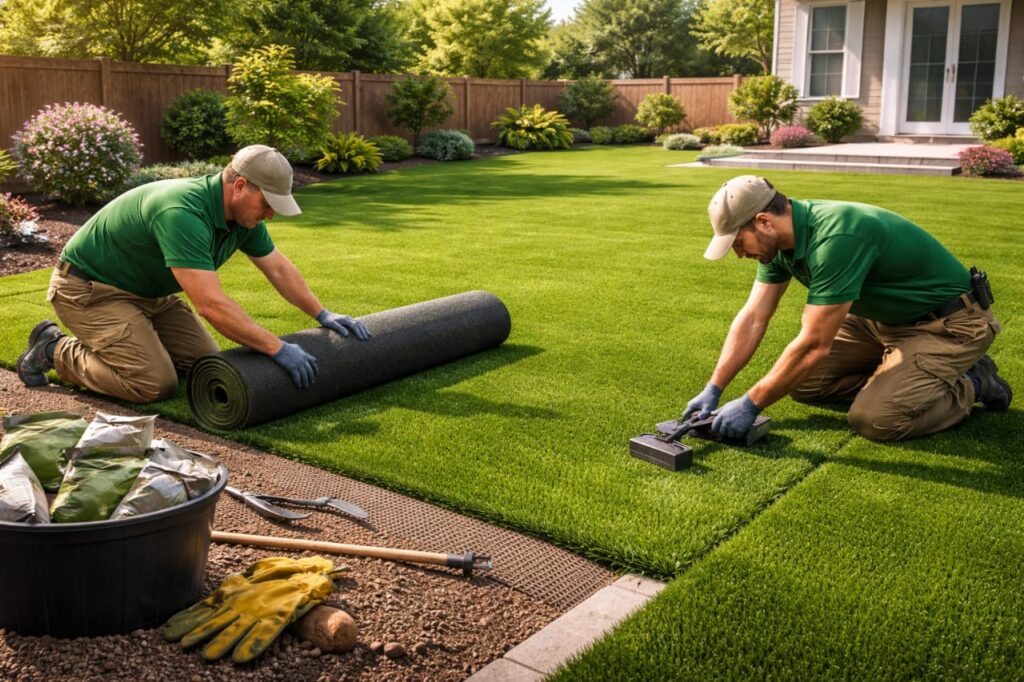
Bad seams. Poor base compaction. Inadequate drainage. Wrong infill. No edging restraint. I’ve seen premium turf look awful in 18 months because the sub-base was rushed and the seams telegraphed like a road map.
The turf roll isn’t the whole story.
Turf types (where each one actually shines)
Different turf constructions exist for a reason. You don’t need to memorize them, but you should understand what they’re optimized for.
Traditional landscape turf
The “front yard photo” look. Usually a mix of blade shapes and thatch fibers for realism. Great for:
– residential lawns
– general play areas
– “I just want it to look good from the street” spaces
Monofilament
Single, distinct blades. Cleaner feel, often drains very well, tends to groom back nicely. Strong choice for:
– patios and rooftops (especially where drainage matters)
– putting greens (in specific builds)
– modern landscapes where you want a crisp surface
Fibrillated / slit-film blends
Durable, good for rough use, but visually less “real grass” unless blended well. Where it works:
– high-traffic zones
– some commercial applications
– utility areas (side yards, walkways)
Needle-punched systems show up in specialty uses; they’re not my default recommendation for a home lawn unless you’ve got a very specific reason.
Pile height + density: stop guessing, match the use
You’ll hear “higher pile is nicer.” Sometimes. Sometimes it’s a floppy, matted mess.
Pile height is how tall the blades stand. Density is how many tufts are packed into a given area. The combination determines whether turf feels plush or pancakes under feet.
– Light-use lounge yard: medium pile, moderate density often looks natural without trapping as much debris.
– Kids + pets daily: medium-to-taller pile with higher density helps resist matting (and hides traffic lanes).
– Commercial foot traffic: density and fiber resilience matter more than height. You can’t “beauty” your way out of abrasion.
Climate makes it weirder. Hot sun? A dense, tall system can hold heat (and you’ll notice it barefoot). Damp shade? A taller turf can look lush, but the drainage and base design better be right or you’ll invite algae.
Now, this won’t apply to everyone, but… if you’re in a wet region, I’d rather see you buy a slightly less “luxury” blade and spend the money on base prep and drainage.
Infill: the part people ignore until it feels wrong
Here’s the thing: infill isn’t optional filler. It’s part of the engineering.
Infill affects:
Feel
Sand-heavy blends tend to feel firmer and more stable. Rubber can add bounce. Organic/mineral options can split the difference, depending on formulation.
Drainage + drying time
Well-graded silica sand supports vertical water movement and keeps the surface from floating or wrinkling. Incorrect infill amounts can cause ripples, premature wear, and weird low spots.
Durability
Infill supports fibers so they don’t fold and fatigue at the base. Compacted or migrated infill means the blades take more stress (and you’ll see matting faster).
A quick reality check: rubber infill has been debated for years in sports contexts. If you’re installing a playground or athletic area, ask for third-party testing and use-case-specific guidance rather than assuming a “yard product” equals “field product.”
A specific stat you can use when deciding if turf even makes sense
Outdoor irrigation can account for roughly 30% of household water use in the U.S., and in drier regions it can be much higher. Source: U.S. EPA, WaterSense (outdoor water use estimates).
That doesn’t automatically mean turf is the right answer, but it explains why so many homeowners start looking when water bills climb.
Durability + warranties (what they don’t tell you on the brochure)
A warranty is only as good as the exclusions.
Most decent products advertise something like 8, 15 years, but the coverage details matter more than the headline number. You want clarity on:
– UV/fade protection (what counts as “excessive fading”?)
– Backing integrity (tuft bind, delamination)
– Seams (often excluded if installation isn’t approved)
– Drainage (sometimes covered only if their base spec is followed)
In my experience, the turf itself usually survives. The failure points are edges lifting, seams separating, and base settlement. Those live in the install scope.
Maintenance: not zero, just predictable
If someone promises “no maintenance,” they’re selling you a fantasy.
Most homeowners do fine with a simple rhythm:
– Blow off leaves and debris so organic matter doesn’t break down into dust and feed algae.
– Rinse occasionally (especially pet areas).
– Brush or rake with synthetic-turf-safe tools to stand fibers back up in traffic lanes.
– Spot clean spills fast. Blot. Rinse. Don’t scrub like it’s carpet.
One-line truth:
You’re replacing mowing with light housekeeping.
Pet owners: choose a build designed for pet drainage and odor management. Some systems add antimicrobial features; some just rely on smart base design. The base usually matters more.
What actually drives installed cost (and why two quotes aren’t comparable)
Turf pricing is rarely apples-to-apples because installers can hide big differences inside “site prep.”
Cost drivers typically include:
– Square footage + shape complexity (curves and obstacles increase labor and seams)
– Excavation and base depth (this is where good installs cost more)
– Drainage solution (permeable base, added drains, grading)
– Turf specs (fiber type, density, backing quality)
– Infill type and quantity
– Edging/restraint (concrete mow strip, bender board, nailer systems)
– Access (tight gates, hand-carry, stairs… labor jumps fast)
Ongoing costs are modest but real: occasional infill top-ups, grooming, cleaning products (if needed), and the rare repair.
Quote evaluation: ask these questions, then watch how they answer
You don’t need to interrogate people. Just listen for precision.
Questions that separate pros from “we’ll figure it out”:
- What is the exact turf product name and spec sheet (pile height, density, face weight, backing type)?
- How deep is the base, what material, and how is it compacted?
- What drainage rate does the turf/backing support, and how do you handle low spots?
- What infill are you using, how many pounds per square foot, and why that amount?
- How are seams made (glue type, seam tape width), and where will seams land?
- What edge restraint is included?
- Who honors the warranty, manufacturer, installer, or both, and what voids it?
Red flags I don’t ignore:
– “All turf is basically the same.”
– No line-item breakdown (turf vs labor vs base vs infill).
– Vague warranty language with no manufacturer documentation.
– No plan for water flow on sloped or shaded sites.
– A price that’s dramatically lower than others without a clear explanation (usually base depth, infill quantity, or turf grade got “optimized”).
Performance, safety, lifestyle fit (the stuff that determines happiness)
Turf is great when you want a clean, consistent surface. Mud disappears. Patchiness disappears. Your weekends come back.
But you should go in with eyes open:
– Heat: it can get hot in direct sun. Shade, lighter tones, and occasional misting help; some infills claim cooling benefits with mixed results depending on conditions.
– Traction: tuned by fiber + infill. If you have kids sprinting or you’re building a sport zone, specify for it.
– Safety: ask for product testing relevant to your use (playground fall ratings are not the same as “non-toxic” marketing).
– Smell/pets: design the drainage and cleaning routine upfront or you’ll be annoyed later.
I like turf most for people who value consistency and hate yard chores. If you love gardening, living groundcover, and seasonal change, turf can feel a little… sterile. Not bad. Just a different lifestyle choice.
One last thing before you request a quote
Ask installers to quote the system: turf + base + drainage + infill + edges + warranty terms in writing.
That’s how you avoid decision fatigue. And it’s how you keep your money from evaporating into “change orders” halfway through the job.